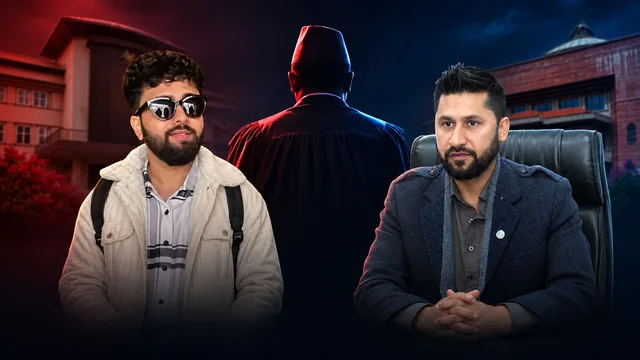
A party secretariat meeting chaired by RSP Chair Rabi Lamichhane on Saturday, October 31, decided to instruct its parliamentary party to pursue constitutional measures addressing concerns over judicial integrity and accountability.
RSP spokesperson Jagadish Kharel said the party believes Parliament should take the necessary steps to address problems within the judiciary and support broader institutional reforms.
Although impeachment is among the options being considered, the party has not publicly confirmed the formal registration of an impeachment motion against any particular judge.
What Triggered the Controversy?
The controversy intensified after WhatsApp conversations between Supreme Court Justice Hari Prasad Phuyal and alleged judicial intermediary Inam Sapkota became public.
According to published communications, Sapkota allegedly approached Phuyal regarding a pending case involving businessman Rohit Gupta, claiming that the Prime Minister was interested in the matter.
The messages indicated that Sapkota wanted Gupta's petition dismissed and the businessman kept in custody.
However, the Supreme Court bench dismissed Gupta's habeas corpus petition while ordering his release on bail of Rs 2 crore through a separate petition challenging his detention.
The disclosure raised questions about attempts to influence judicial proceedings through claims of political connections.
Justice Phuyal Confirms Hotel Meeting With Other Judges
Justice Hari Prasad Phuyal subsequently acknowledged meeting Sapkota at Hotel Himalaya in Kathmandu.
In an interview published on October 29, Phuyal confirmed that other judges were also present during the meeting but declined to reveal their identities.
Phuyal claimed that Sapkota had warned the judges about possible impeachment proceedings and suggested that the Prime Minister was dissatisfied with them.
The justice denied making any improper arrangement or engaging in financial misconduct. He maintained that he and other judges had become suspicious of Sapkota and subsequently shared information about him with authorities.
Chief Justice Also Drawn Into Controversy
Chief Justice Manoj Kumar Sharma was also drawn into the controversy after documents reportedly recovered during the investigation mentioned his name alongside financial transaction details.
However, the available disclosures do not independently establish that the Chief Justice received any money or participated in illegal transactions.
Sharma publicly rejected the allegations, stating that he had no direct or indirect connection with Sapkota and had never met him.
He also questioned the reports, explaining that he had not yet assumed the position of Chief Justice during the months mentioned in the alleged transaction records.
What Happens Next?
RSP has assigned its parliamentary party responsibility for determining how to proceed with the controversy.
Party officials have indicated that impeachment proceedings against Justice Phuyal and potentially other judges could be considered, depending on the available evidence and further examination.
Under Nepal's Constitution, an impeachment motion against a Supreme Court judge requires the support of at least one-fourth of the serving members of the House of Representatives to be registered. Its passage requires a two-thirds majority.
RSP currently holds 182 seats in the 275-member House, two short of the 184 votes needed for a two-thirds majority if all seats are occupied.
The controversy has intensified discussions about judicial independence, transparency, accountability and the possible influence of intermediaries in Nepal's justice system.
No judge has been legally established as guilty of wrongdoing in connection with these disclosures. Any impeachment action would require constitutional procedures, examination of evidence and a formal parliamentary decision.